2.jpeg)
Connectivity has become a
defining element in the evolution of digital payment systems. Today, it is no
longer limited to linking users and merchants within a single country but
extends to enabling cross-border transactions that are more efficient,
accessible, and aligned with increasingly mobile lifestyles.
In this context, the expansion
of QRIS cross-border connectivity to South Korea and China in April 2026 marks
an important milestone in Indonesia’s journey toward a more globally integrated
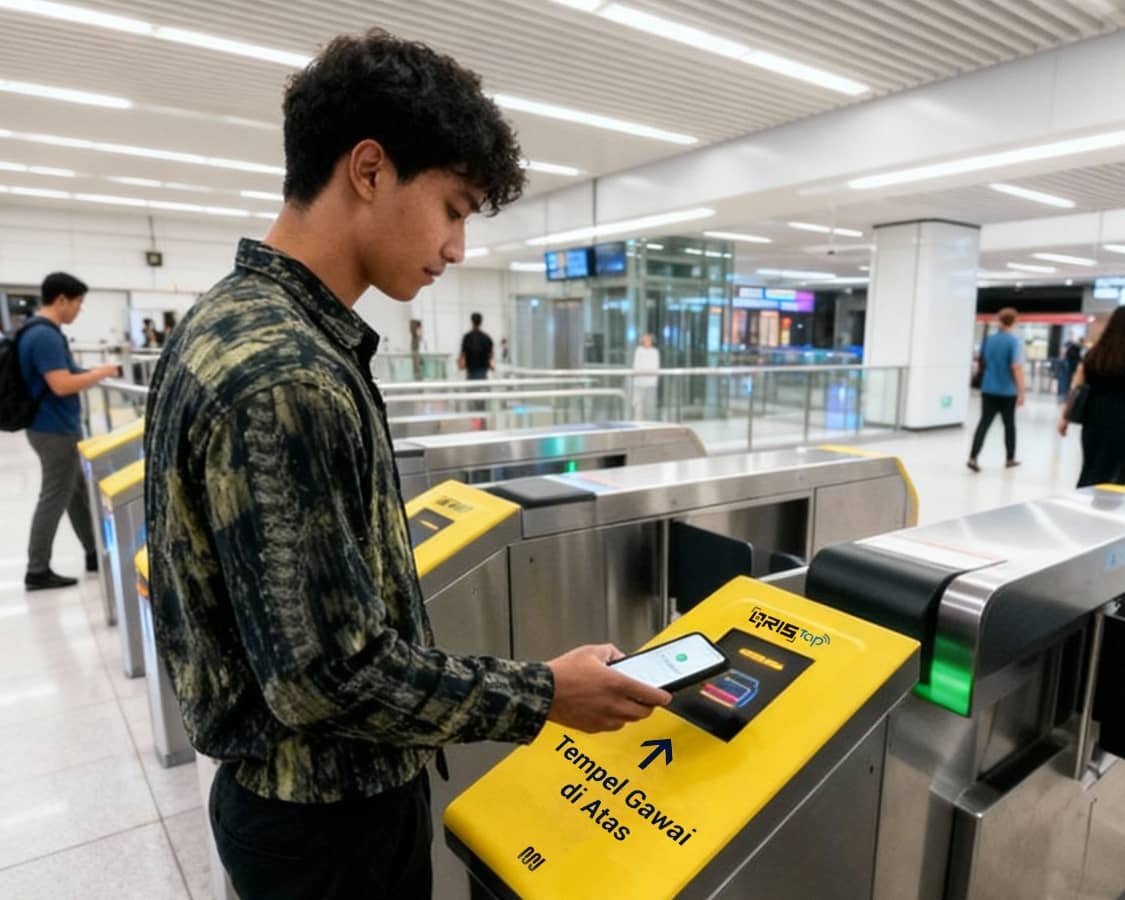
payment ecosystem. The initiative enables Indonesians to make payments abroad
using domestic applications, eliminating the need for conventional foreign
currency exchanges and making transactions more convenient.
QRIS
as a Catalyst for Digital Payment Transformation
Since its launch, QRIS has
played a central role in accelerating Indonesia’s digital payment
transformation. As of February 2026, Bank Indonesia (BI) reported that the
number of QRIS users had reached 60.77 million, reflecting strong and growing
adoption across the country.
Cross-border QRIS usage has
also demonstrated encouraging growth. In 2025, inbound transactions from
foreign visitors in Indonesia reached 5.89 million, significantly exceeding
outbound transactions by Indonesians abroad, which totaled 1.68 million.
This trend indicates that QRIS
not only simplifies payment processes but also contributes to domestic economic
activity, particularly in tourism and consumer spending.
Expanding
into Key Global Markets
The expansion of QRIS
cross-border services gained further momentum in 2026. Bank Indonesia, in
partnership with the Bank of Korea, officially launched QR payment connectivity
between Indonesia and South Korea, allowing Indonesian users to transact seamlessly
in South Korea using QRIS via their domestic payment applications.
Shortly after, on 30 April
2026, Bank Indonesia extended QRIS cross-border connectivity to China,
broadening access to one of Indonesia’s largest economic partners.
This expansion builds on
earlier implementations across ASEAN countries and Japan, and forms part of
Indonesia’s broader roadmap to strengthen cross-border payment integration.
Enhancing
Efficiency and Unlocking Cross-Border Potential
The integration of QRIS into
cross-border payments offers meaningful improvements in transaction efficiency.
Through the Local Currency Transaction (LCT) scheme, users can transact
directly in local currencies, reducing reliance on foreign exchange conversion
and lowering transaction costs.
The opportunity is
particularly significant in the context of Indonesia–China economic relations,
where LCT transactions between the two countries have reached approximately USD
18 billion.
Looking ahead, Bank Indonesia
aims to expand QRIS cross-border connectivity to up to eight partner countries,
including Singapore, Thailand, Malaysia, and Japan, with potential expansion to
India. This initiative reflects a broader effort within the payment ecosystem
to create a more connected, efficient, and inclusive global payment landscape.
At the same time, domestic
expansion remains a key priority. Bank Indonesia has set targets of 60 million
users, 45 million merchants, and 17 billion transactions through QRIS, further
strengthening the foundation of Indonesia’s digital payment ecosystem.
Strengthening
the Foundation of Payment Interconnectivity
As cross-border connectivity
expands, the role of reliable and integrated payment infrastructure becomes
increasingly critical.
As Indonesia’s national
Payment System Infrastructure Provider (PIP), Jalin contributes to
strengthening the interconnectivity and interoperability of the digital payment
ecosystem. Through secure, reliable, and trusted infrastructure, Jalin supports
the integration of payment services aligned with the Blueprint for Indonesia’s
Payment System (BSPI), enabling seamless operations both domestically and
across borders.
In the broader context, this
role supports the development of regional digital economic connectivity, where
payment systems serve not only as transaction enablers but also as strategic
infrastructure underpinning economic integration.
Tips
for Using QRIS Safely Abroad
As QRIS cross-border adoption
grows, users are encouraged to remain vigilant when transacting overseas.
To stay safe, consider the following:
- Scan only from official and trusted merchants
- Verify the transaction amount and currency before confirming payment
- Use authorized payment applications
- Never share your PIN or personal information
The expansion of QRIS
cross-border connectivity to South Korea and China represents a meaningful step
toward delivering a more seamless payment experience for Indonesians abroad.
Looking forward, Indonesia
aspires to become a regional hub for digital payments in Asia, driven by
continued efforts to expand connectivity and create a more integrated and
efficient transaction ecosystem.
With broader access and
improved connectivity, users can now transact across borders with greater
ease—while maintaining the importance of security and awareness in every
transaction.
.jpeg)

.png)
.jpg)

.jpeg)

_jpg.jpeg)