
Jakarta — The continued growth of the digital economy is creating greater opportunities to optimize state revenue. The Directorate General of Taxes (DGT) recorded digital economy sector revenues of Rp42.01 trillion as of June 31, 2026, up significantly from Rp731.4 billion in 2020, when the government first introduced Value Added Tax (VAT) collection under the Electronic Commerce (Perdagangan Melalui Sistem Elektronik/PMSE) scheme.
In line with this growth, the implementation of the Foreign Digital Transaction Tax Collection System (Sistem Pemungutan Pajak atas Transaksi Digital Luar Negeri/SPP-TDLN) represents one of the government's strategic measures to optimize fiscal revenue from cross-border digital transactions. The policy is also aimed at establishing a level playing field between domestic businesses and foreign digital service providers within the digital economy ecosystem.
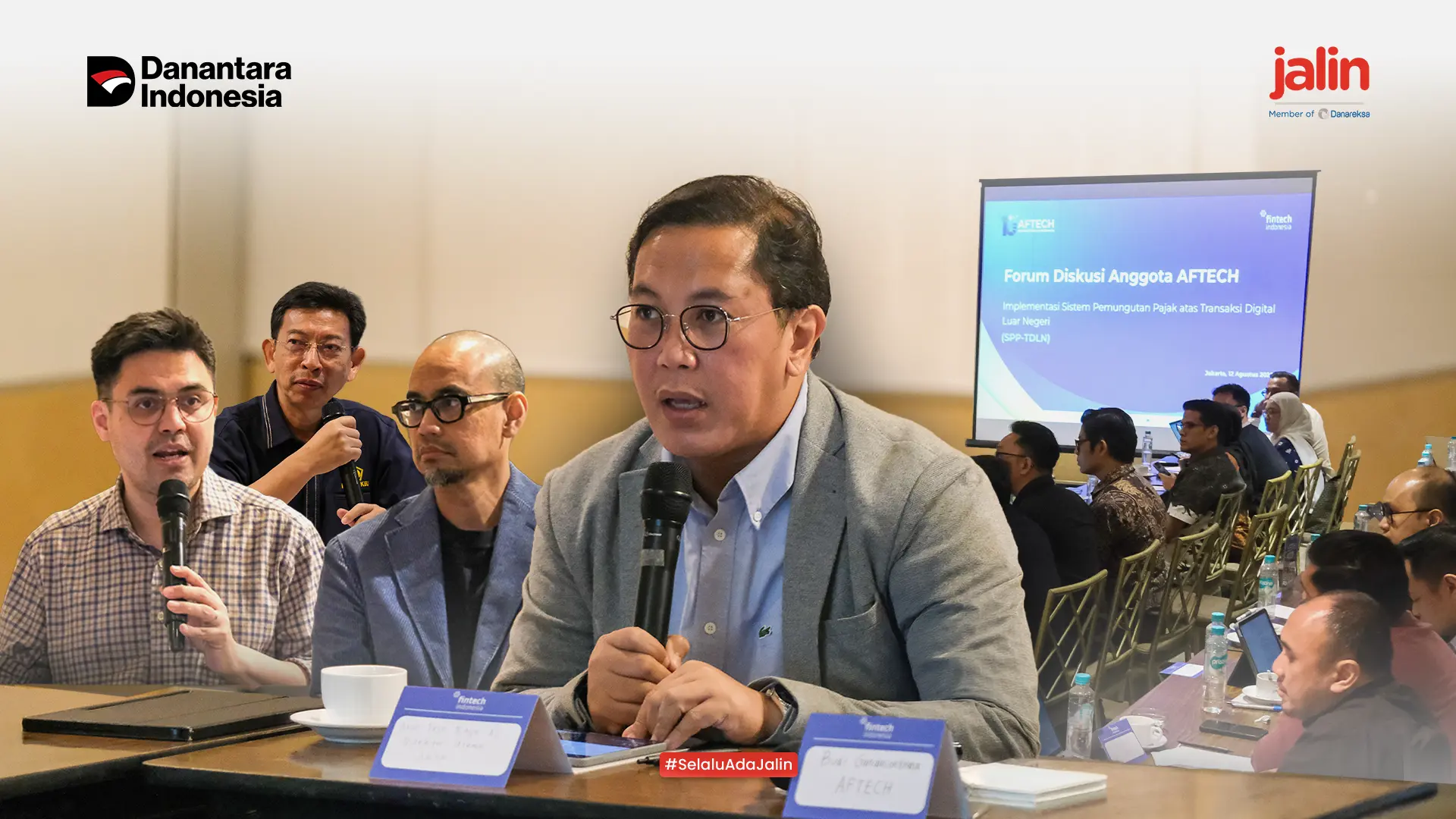
Support for the implementation of SPP-TDLN was reaffirmed by the Indonesian Fintech Association (Asosiasi Fintech Indonesia/AFTECH) together with its members from the payment systems and banking sectors through the AFTECH Members Discussion Forum, themed “SPP-TDLN Implementation,” held in Jakarta on Wednesday, August 12, 2026. The forum brought together AFTECH members, the DGT, and PT Jalin Pembayaran Nusantara (Jalin) as the operator of the SPP-TDLN infrastructure.
During the forum, AFTECH emphasized that its support for the implementation of SPP-TDLN is aimed at strengthening state revenue while creating a level playing field between domestic businesses and overseas digital service providers. This support is an important part of promoting the effective implementation of the policy, while continuing to take into account the readiness and interests of all stakeholders across the ecosystem.
During the discussion sessions, several AFTECH members also shared their input as part of efforts to ensure that SPP-TDLN can be implemented effectively and securely, while providing greater certainty for all parties involved.
Meanwhile, Jalin emphasized that system infrastructure readiness, as well as the onboarding and testing stages, remain key priorities in supporting the implementation of SPP-TDLN. These preparations are part of Jalin's efforts to ensure that the infrastructure operates reliably while building a common understanding and aligned readiness among the infrastructure operator, Payment Service Providers (PJP), banks, and all parties involved in the implementation process.
For Jalin, the implementation of SPP-TDLN is not solely about technological and infrastructure readiness, but also requires close collaboration among all stakeholders. Accordingly, input from industry players is an important component in ensuring that the policy can be translated into effective and secure processes while providing certainty for all parties involved.




_(1)_(1)1.webp)

_(1)_(1)1.png)
1.jpg)

_jpg3.jpeg)